
God’s Appointed Times
In the Hebrew Scriptures, Leviticus 23 clearly sets out the order and requirements of God’s (YHVH Elohim’s) appointed times (Hebrew…’mo’edim).
As we read Leviticus 23:2, we see that they are, clearly, YHVHs (God’s) mo’edim (appointed times).
He set them as…
…the appointed times of YHVH, which you shall proclaim as holy convocations; My appointed times, they are these
They were/are a statute for His people, Israel, but, since they are HIS APPOINTMENTS, they are set in place for His eternal plans and purposes for all people, not only the Jewish people.
They are universally, and absolutely, a prophetic declaration of His redemption plan for mankind – every date and ordinance specifically set in place.
Through time and traditions of men, we have not learned, regarded or guarded these specific instructions of our YHVH Elohim.
Here we begin a thorough investigation into how this could have happened.
TIME… God’s time… not as we know it!
YHVH Elohim is outside time.
He is not bound by time… He exists in eternity… He was, is, and is to come, the Eternal One.
As the writer
of the book of Ecclesiastes points out,
“That which has been is now and that which is to be has already been and the Elohim requires/seeks that which has been driven away” (Ecc 3:15)
He is also the Unchangeable One and what He has put in place should never be changed – added to or taken from (Ecc 3:14). Unfortunately, in our study we will find that things have been changed… many things… but more of that later!
Our Creator God has, however, taken a section of eternity and structured what we know as TIME. Within that time-frame is His redemptive plan for the earth and for humanity; a beautifully crafted plan of great symmetry, modelled (metaphorically) by earthly seedtime and harvest.
So, we live out this time in this place called earth.
Hebraic thinking functions in cycles/circles, NOT linear, which orders things as having beginning, middle and end.
In the West, we tend to have this Greek, linear, way of thinking. We do it subconsciously and automatically. (See our section in Hebrew Roots…’Greek thinking V Hebraic thinking’)
So, to properly understand the Hebrew Scriptures, we need to address this foundational Hebraic cyclical thinking.
YHVHs cycles of time are in place on a basis of 7.
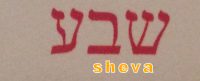 – sheva (Hebrew) – 7
It speaks of ‘ceasing’ in relation to completeness.
 -shavua – a week (7-day unit of time)
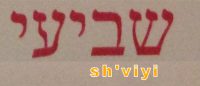 sh’viyi – seventh
We will look at this in much greater detail at a later stage.
On the seventh day, Elohim finished His ‘work’ of Creation; it was complete.
He blessed that day (the only day He blessed!… that’s significant!) and separated it/sanctified it from all the other days.
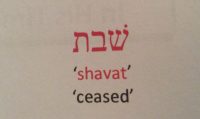
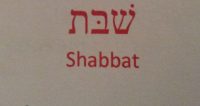
The following video should help to put this in place as a foundation.
The cycles, which are YHVHs set-times or appointments(Hebrew ‘mo’edim’) for His people(not only Israel or the Jews), fall within the 7 months of harvest every year.
It’s all about HARVEST!
What did Yeshua(Jesus) say?
Matthew 13:39
“The harvest is the end of the age and the harvesters are the angels.”
Turn to Revelation 14 and you will see this confirmed.
All the harvest references in scripture are not only about physical sowing and reaping but they are highly spiritual and symbolic, prophetically declaring God’s entire redemptive plan for the world.
When did Yeshua fulfil His prophesied death and resurrection? – At the barley harvest, the first of the year’s harvests, known to us as Passover.
Which harvests prophesy the consummation of all things?
- The wheat harvest (the separation of the wheat from the tares Matthew 13:38-39)
- The grape harvest (the grapes of God’s wrath Revelation 14:19)
Introduction to YHVHs repeating cycles
Why are these things generally not familiar to us in the western Church?
How can this be? They are relevant to us as Christ followers!
We have looked in-depth at God’s cycles of 7 and made reference to their absolute relation to harvest.
It’s all about harvest!
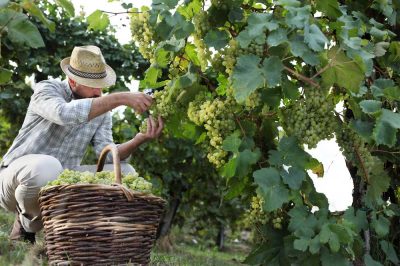
The harvest cycle is a 7 month cycle and the whole plan of redemption is wrapped around this. The 7 month mo’edim (YHVHs appointed times) are prophetic in every way. Yeshua(Jesus) referred to the harvest as
“the end of the age” Matthew 13:39
We have considered how these appointed times, these meeting times with YHVH, have been changed or missed altogether, through wrong translations, wrong theologies, and, just generally, Man’s handling(or mishandling!) of what YHVH had put clearly in place.
We are to “remember” and “keep” these times, not as a heavy religious burden of works but counting them as a privilege to walk with Him in His rhythm and have recognition and expectation of these times being fulfilled.
Let’s look at how every element of the Passover(Pesach), the second of YHVHs appointed times, was fulfilled in Yeshua the Messiah.
In the first month of the Hebrew year, when the barley was determined to be ‘aviv’ (the point of ripening), the barley harvest began.
On the 10th day of that month(Aviv), the lambs for sacrifice were chosen from those specially bred in Bethlehem. They were brought to Jerusalem for 4 days of inspection because there were strict requirements for those sacrificial lambs – pure, unblemished, and a year-old male.
The date and timing of the sacrifice was absolutely set for 14th day of Aviv, at evening, in remembrance of the final judgement on Egypt (Exodus 12:1-28) – the death of every firstborn in every home that did not have the blood of the sacrificed lamb on the doorposts and lintels. It was to begin the freedom from Egyptian bondage – the Exodus.
Everything in the Pesach(Passover) rituals foretold the death of the LAMB OF GOD, YESHUA(Jesus).
This appointed time is the 2nd of those laid out, with clear instructions in Leviticus 23.
Let’s look at how many elements of Passover found fulfilment in Yeshua’s, our Messiah.
It’s all about LOVE – love that gave us LIFE – the love of God, who gave Himself for us, to set us free from the bondage of sin.
I wonder have we ever deeply understood the significance of the 7 days of unleavened bread that follows the Passover meal?
Why 7 days? Why does the bread have to be unleavened?
Most of us will have heard of the spiritual, symbolic connection of leaven with sin, so let’s take a look at the symbolism of leaven.
As far as bread is concerned, once leaven (or yeast as we know it) is added to the dough, it radically changes the whole mix,
We’re so familiar these days with making sourdough, which follows the ancient tradition of reserving a piece of dough from the previous day(known as a ‘mother’ or starter) to create the leavening process in the fresh dough.
I want to say something very significant here; ONCE YOU PUT THAT OLD DOUGH INTO THE NEW, YOU CAN’T STOP THE LEAVENING HAPPENING!
Spiritually speaking, that’s the way sin works in us and we all have sinned!
James 1:15
“After desire has conceived, it gives birth to sin and sin, when it is full-grown, brings death”
You only have to look back at Eve and remember that she first desired that forbidden fruit and then chose to taste it, with devastating consequences.
The association of leaven with sin is why, in ancient Israel, no yeast was allowed to be burned on the altar.
Sin, described in scripture, has many and varied expressions.
In Matthew16:6-12 Yeshua(Jesus) described the false teaching of the Pharisees and Sadducees as the leaven (or sin) of hypocrisy.
“Be on your guard against the leaven of the Pharisees and Sadducees.”
Their false teaching was deceptive and as widespread as the leaven in bread.
1 Corinthians 5:6-8
Paul strongly teaches the same message about the corrupting influence of sin (in this particular case, it was sexual sin).
“A little leaven leavens the whole lump…get rid of the old yeast so that you may be a new, unleavened batch…the unleavened bread of sincerity and truth”.
Overall, in scripture, leaven has been the symbol of hypocrisy, false teaching, corruption, pride, unholy desires, sexual immorality etc etc…the list could go on and on.
The effect of leaven, or sin, is an automatic process. To repeat what I said earlier; once you put that old dough into the new, you can’t stop the process happening!
Sin came through the first man and woman; the bloodline was contaminated. It required Yeshua’s pure blood as a sacrifice and covering for our sin.
In Egypt, the blood of the lamb was put on the doorposts and lintels as a sign, and a covering from death passing through Egypt that night.
The Israelites’ flight that night meant that their bread had no time to rise. That was symbolic of them leaving bondage, slavery and idolatry behind.
This is what the 7 days of Unleavened Bread at Passover means to the Jewish people.
It’s a direct command from God for all generations. They meticulously follow the ‘no leaven’ command in those 7 days. Their house are traditionally scrupulously cleaned to ensure that no leaven remains.
WHY 7 DAYS?
7 means completion/fulfilment.
The cycle of 7, YHVHs rhythm of time, is outstanding in biblical terms.
It’s all through scripture from Genesis to Revelation.
It’s a cycle of completeness and wholeness.
What does all this mean for those of us who have the covering of the blood of Yeshua, our Messiah and Saviour from sin?
Because we have been washed in the blood of Yeshua, it has broken our inherited sin-cycle, the old ‘leaven’ that has been taken through from generation to generation -the “sins of the fathers visited on the children” as scripture describes it.
Sin in one generation becomes iniquity to the next, if it’s carried through without repentance. To have a generational iniquity cleansed by the blood of Yeshua breaks the chain of receiving something from the ‘old’.
The provision of YHVH Elohim for a covering for sin was first in the covering of the blood of the lamb on the doorposts and lintels of the homes in Egypt.
Secondly, the command to eat the lamb with unleavened bread signified that nothing of the old life of bondage was to remain.
Exodus 12:14-17
“This is a day you are to commemorate…a lasting ordinance…for 7 days you are to eat bread made without leaven…celebrate this day as a lasting ordinance for the generations to come…”
The command to have the bread unleavened had not only immediate significance in Egypt and for the generations to come but carried with it the prophetic significance of what it would mean for all people everywhere, in every age, to have an ‘old life’ changed and transformed.
The immediate necessity was deliverance from an OLD LIFE of slavery in Egypt; the prophetic significance is deliverance from an OLD LIFE of sin through the precious blood of the pure Lamb of God, which God would provide in an age to come.
So, at Passover, we celebrate the significance of our Saviour’s blood for the covering of sin and those 7 days of Unleavened Bread as a symbol of the breaking of the old cycle of sin and iniquity in our lives.